Why I am conserving Akiyas and Kominkas with Akiya2.0
Reflecting on my journey as an architect, I’ve shifted from focusing on designing new buildings to developing a passion for conservation. Early in my career, I enjoyed creating modern structures and pushing design boundaries. Modern materials offer the opportunity to make shapes and spaces that are utterly original, and where they are commissioned by the owner, the chance to allow the owner to create something directly from their own imagination. What modern architecture doesn’t do, however, is connect with the people, traditions, and history of the land. In some countries, this really isn’t an issue because their history began recently, but in Japan (and many other parts of Asia), where there is deep history and tradition, ignoring a property’s heritage is to leave out a whole dimension of meaning for the building you are working on. It’s like seeing a black and white impressionist painting versus a color one.
This change in my attitude and values really started to coalesce during a semester at university dedicated to the topic of the role of architecture and conservation in an aging population. The setting was Inujima (lit. Dog Island) in the Setouchi Inland Sea, coincidentally just east of Shimanami Kaido where Akiya2.0 is beginning our own project today. Japan’s approach to restoring its heritage homes—known as akiya—added a whole new layer. The craftsmanship was meticulous, with every beam, wall, and joinery telling a story. I even had the chance to chat with luminaries like Kazuyo Sejima and Chiba Manabu, who shared their thoughts on balancing architecture with nature and history, sparking something deeper in me and fueled my desire to contribute to conservation efforts, blending history with modern comfort and utility.
My favorite periods of traditional buildings that you can still see and buy in Japan are Kominka homes dating from the 1850’s to WW2, and the more practical Minka built from the early 1900’s until the early 1960’s. Machiya, as you would see in Kyoto, are pretty cool as well. During these periods, high-grade materials and craftsmanship were generally used, and traditional post-and-beam engineering meant that, providing the building received some basic maintenance, the structures are still standing and thus reusable today. OK, not everyone had the money to create a well-built home, but this is a non-issue for me, as those lean-tos are long gone anyway.
Walking into these homes, whether renovated or dilapidated, you get a real sense of history and connection. You might see smoke on the ceiling timbers from decades of grandma cooking on an irori hearth, or treading along an engawa, the creaking boards invoke images of a kimono-clad mom checking on her kids sleeping in another room. Sometimes in a renovation we will find alcoves with old calendars, books, pottery, laquerware, chests, tools, and other items lost or left by long-dead prior owners. Actually, my favorite method of purchase is “buyer to dispose of trash”, because among the clothes and broken dishes, you’ll often find a hidden treasure or two.
My career is now fully focused on restoration and social impact. I’m excited to be part of Akiya 2.0, where I can apply this passion practically. We are revitalizing rural communities in Japan, particularly in places like Noto, where many traditional homes, or akiya, sit empty and where the region badly needs new blood and new flows of capital. Our goal is to bring these spaces back to life, preserving their character while providing modern living solutions. It’s fulfilling to be part of a team that positively impacts communities and connects visitors (and even residents) with their heritage.
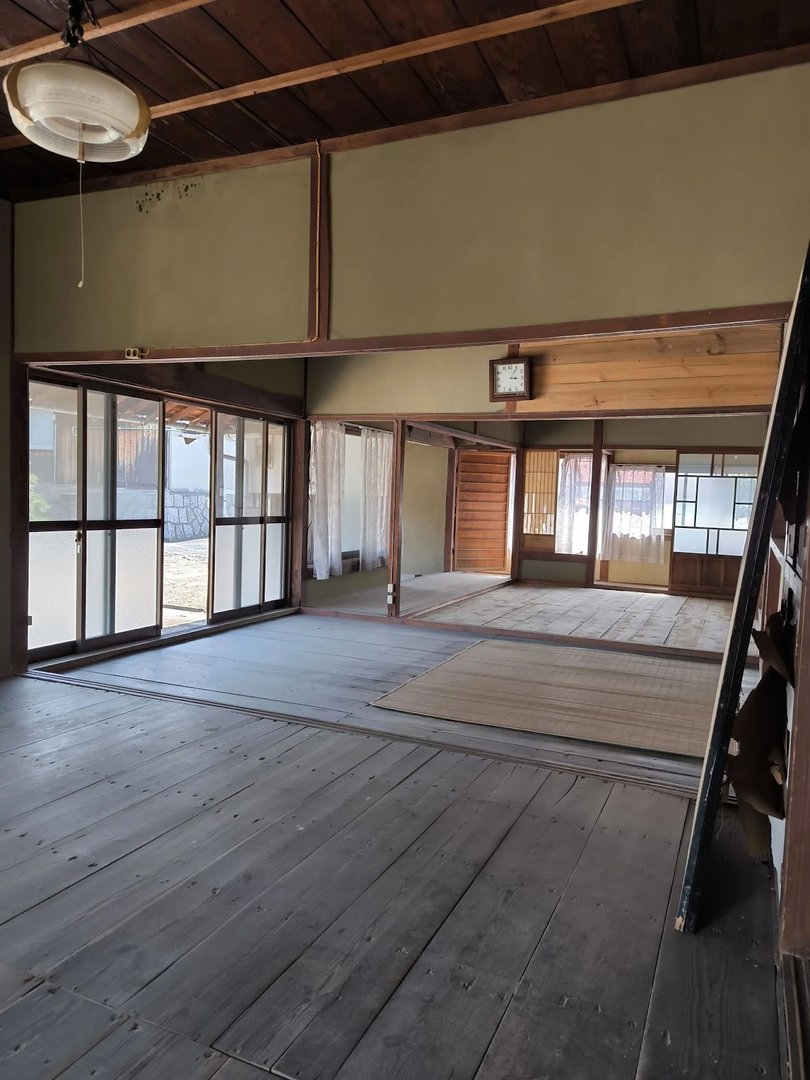
In my role, I get to work closely with local communities, understanding their needs and how revitalized spaces can benefit them. When normally reticent neighbors see me or our team working to clean up a property or to restore its exterior, It’s really rewarding to have them come over for a chat and cup of chai tea (they already have ocha at home - and anyway we’re there to entertain them), share the history of the home and neighborhood with us, and to understand how our efforts will make their homes go up in value as well. By rebuilding what was probably a neighborhood eyesore, we are helping to restore energy and purpose to their neighborhood.
It is not easy work of course, and a much different role from a previous life where the focus was mostly on making the most aesthetically pleasing buildings possible from the perspective of the architect and his client, only. We now carry on our shoulders the hopes and wishes from a community that, while aging, still wishes to leave their culture alive for future generations, even if that must entail sharing their culture and space with foreign visitors.
This work has allowed me to combine my past interests with my newfound focus, and I’m genuinely happy with where I am. Conservation architecture isn’t just a career for me; it feels like a way to make a real difference while appreciating the beauty of traditional structures. If you’re curious about what Akiya2.0 is doing or want to learn more about conservation, feel free to check out our initiatives.