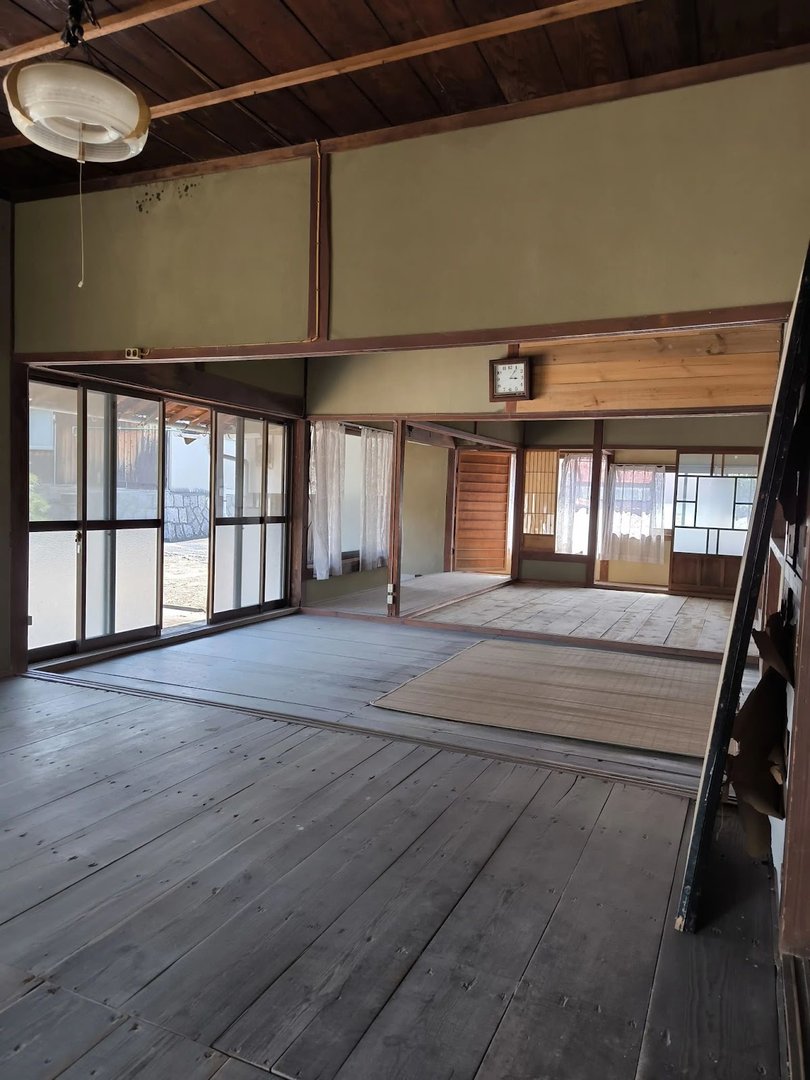
When Buying an Akiya, Nothing Beats a Personal Viewing
Buying an akiya in Japan is really starting to trend on social media now that people with flexible jobs abroad (outside Japan) can see just how cheap a fully functional dwelling can be here. Decent homes can be had for 3 to 12 million yen (US$20,000-82,000 approx.) and at the higher end these will be in picturesque locations or near shopping, train stations, and other public facilities. The whole space is an exciting daydream generator and it’s easy to get carried away with all the possibilities.
The fact that there are so many people actually considering buying a place in Japan now, this is increasing competition for the best new listings. Particularly around major cities and near the ski fields, fresh listings may only appear for a few days before the notification goes up that the property is under negotiation. This means that if you see something you like, you need to move quickly. But how to do this when you are thousands of kilometers away?
To be able to move quickly, the best way forward is to see the property yourself, both inside and more importantly outside, so that you can make both a reasonably informed decision as well as an intuitive connection. Seeing the actual location opens up your awareness of a lot more potential negatives than do a few selective photos the seller has posted.
Can't hop on an airplane tomorrow? Well luckily, a number of companies, including us here at AKIYA2.0, offer live streaming remote viewings by browser and flyovers by drone where permitted. Furthermore, we conduct these viewings with a local realtor present, so that you can ask questions just like you would if you were there in person. Yes, looking into a browser window is not quite as effective for establishing your chemistry/feeling for the property, but at least our team can enhance the remote experience by giving you a neutral professional opinion to reinforce what you do see.
So what kind of potential negatives are you likely to spot in a personal viewing? The fact is that akiya are usually cheap because there is something wrong with them - or near them (i.e., the neighborhood). So it's up to you to find out what those elements are. If it's obvious that the building needs lots of renovation work, OK, that is self explanatory. But often it's the indirect issues that will strongly condition whether you feel this is the place for you. As an example, while a home may look lovely in the photos, the seller is not going to show you the property next door that is an absolute eyesore, loaded with trash and overgrown with weeds.
Other common problems you won't recognize until you're there are things like: there is a wonderful view from your property, but the seller has omitted the small detail that you can't actually see that view from the house itself, only from the corner boundary. Advertised is a cheap coastal home with wonderful ocean views, but in reality the view from your living room is blocked by tall trees on a neighbor's property, or even worse, marred by their roof line, fences, or heavy power lines.
Then what about limited access to the property? This may occur as a tiny or non-existent driveway or a “spite strip” of land that prevents you legally having full access to your property from the road side. Sure, the agent may assure you that the farmer owning the land will be happy to rent you access across the strip for JPY5,000/year, but what if you have a dispute? They can legally block access to your property. In our inspections, if we see a bare strip of land near the property, we'll tell you not to get excited about that kitchen garden you're going to put in there…!
Then there is the neighborhood itself, which after all you are going to have to integrate into at some level if you are planning a future in Japan. On a personal visit, seeing old people everywhere may mean the area is aging out, which can be a big negative if you want to have a young family there. On the other hand, if you are retiring, it could actually be a good thing because you may be able to pick up more low-cost properties in the area in the future.
Don't forget support facilities. At very least, you'll want a good local supermarket, a conbini for banking and after hours emergencies, a gas station - oh, and hardware store - as in the countryside it may take weeks to schedule handyman services for the inevitable breakages that happen in a pre-loved home.
Some neighborhoods, especially in stiff upper lip regions like Kyoto, don't really like foreigners, and so your first visit may be able to tell you if your new neighbors are willing to at least say “konnichiwa” and respond with a smile. If not, be prepared for the possibility of local authority complaints about rubbish, tree growth, noise, and even “suspicious-looking foreigners sneaking around” as nasty neighbors try to get their daily entertainment in.
Is Japan racist to new foreign neighbors? Actually, most people in secondary cities and rural areas are very welcoming of foreign residents, as for them it's interesting and entertaining. So if you are willing to engage with the community you will definitely become both famous and the target of many small gifts from those around you. We believe that buying an akiya in Japan is about more than just property ownership; it’s about becoming part of a community and helping to preserve cultural heritage. Many who embark on this journey find it rewarding in ways they never anticipated.
If you’re curious to learn more, check out Akiya Bank or explore AKIYA2.0 further. Happy house hunting!