Repurposing the past for the future
When I think of a kominka, a traditional Japanese home, I often imagine a quasi-museum piece. I imagine it to be untouched, a testament to Japanese history, or perhaps inhabited by an elderly couple. A trip through the more rural, even just suburban, areas of Japan quickly disabuses me of that notion. Instead of the expected museum pieces, I saw kominkas that had undergone renovation, now serving as cafes, restaurants, hotels, and more. These kominkas are bases from which the Japanese countryside and suburbia are being revitalised.
Cafe Lierre in Wakayama City is one such example - a kominka repurposed into a cafe. Housed in a 120-year-old building near the water, it was once the vacation home of pre-war politician Okazaki Kunisuke. Today, it's best known for its Brussels waffles and breakfast menu. With its charming atmosphere, the cafe helps shine a light on a part of Japan that’s often overlooked by both domestic and international tourists. And while Cafe Lierre has gained popularity, with hundreds of reviews, that doesn’t mean every revitalized kominka is well known, nor does it need to be to make a meaningful impact. Some are just local treasures.
Another interesting repurposed kominka is the Shoan Bunko, lit. Shoan Bookshop. I chanced upon this local treasure just last weekend, while I was visiting my grandparents in the Nishiogikubo suburb of Tokyo. Shoan Bunko is a small-scale kominka bookshop tucked right in between two houses, almost hidden, in a neighbourhood where traditional minka are still not uncommon. If you find an interesting read, you can read it at the adjoining cafe, with a beautiful view of the back garden, great for escaping the Tokyo heat while eating one of their sweets, much extolled by the neighbors. I didn’t have an opportunity to try them for myself; the cafe’s popularity means that you usually need a reservation to eat there.
Nevertheless, I’ve seen firsthand how this bookshop cafe transformed an - in all honesty - boring residential area into a still quaint, yet more active neighbourhood. This kind of positive impact is what Akiya 2.0 hopes to emulate in our projects.
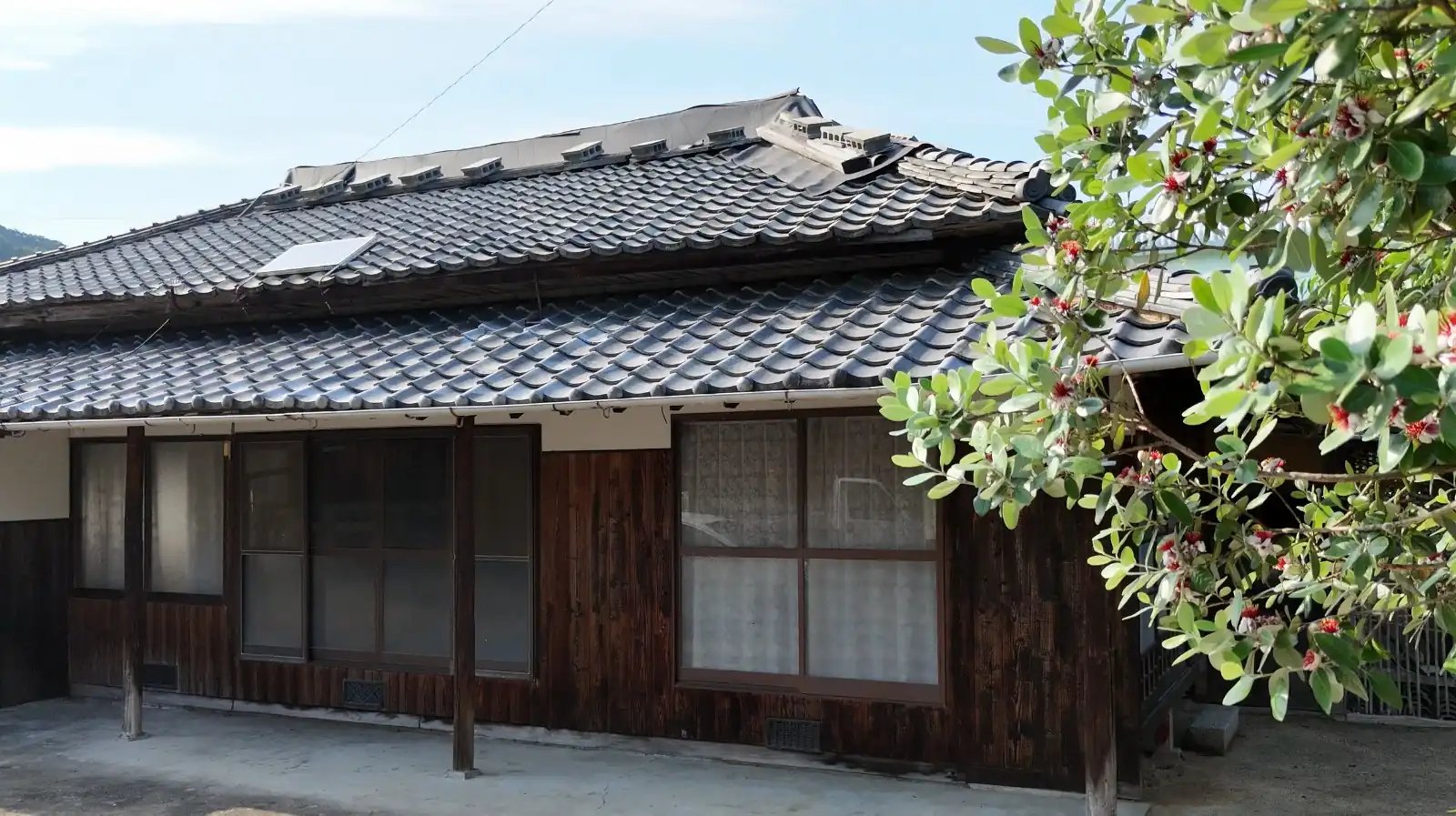
For Akiya2.0, we repurpose kominka into holiday stay locations, keeping the original accommodation intent of these homes, but updating them for the modern visitor. The Amazaki fisherman’s cottage will be the first of a few updated holiday kominka stays in the Shimanami Kaido cluster