The Story of HINOKI STAYS’ Tea House
The Tea House on Omishima Island, Ehime, is a century-old cottage recently restored by our team. It has a long and interesting history, first built 3km down near the coast in the Seto area of the island, then moved about 75 years ago to its current location in Amazaki town. The owners at the Amazaki location were tea merchants, and many of the locals would come to get their supplies there. These days, it’s a fully restored property run under our luxury brand HINOKI STAYS, a division of AKIYA2.0.
Omishima is the largest island on the Shimanami Kaido cycling route. This island-hopping course connects Ehime and Hiroshima prefectures, and Omishima itself is known as a “sacred island” because it hosts the ancient Shinto Oyamazumi shrine, the head shrine of all Yamazumi 10,000 Yamazumi and Mishima shrines across Japan. The island is also quiet and rural, with a small but growing number of family hotels, Airbnbs, and cafes.
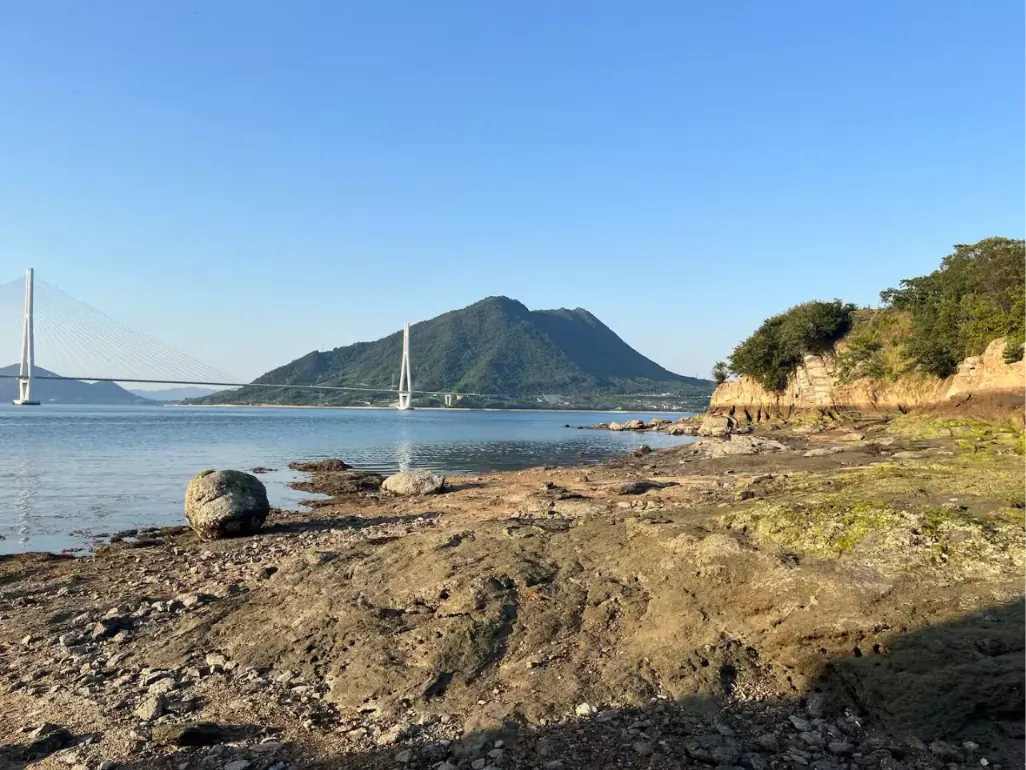
One interesting tradition on the Geiyo islands of Ehime, including Omishima, is that families gave their houses actual names. We discovered that the Tea House was dubbed “Shojudo,” meaning House of Longevity. Houses were considered more than just protection from the weather. They were the gathering point of human activities and family energy, and a healthy and energetic home could contribute to the village overall. This part of Amazaki town used to be called Mizuba, a natural spring with exceptionally good water that the 15th and 16th-century Murakami pirates on nearby Kojo Island would visit to refill their barrels. The Tea House was built to last. The walls were made in the traditional takekomai style, with mud layered over a woven bamboo grid, and the roof was a sturdy tsuchibuki tile roof, with tiles laid over cedar boards and clay.
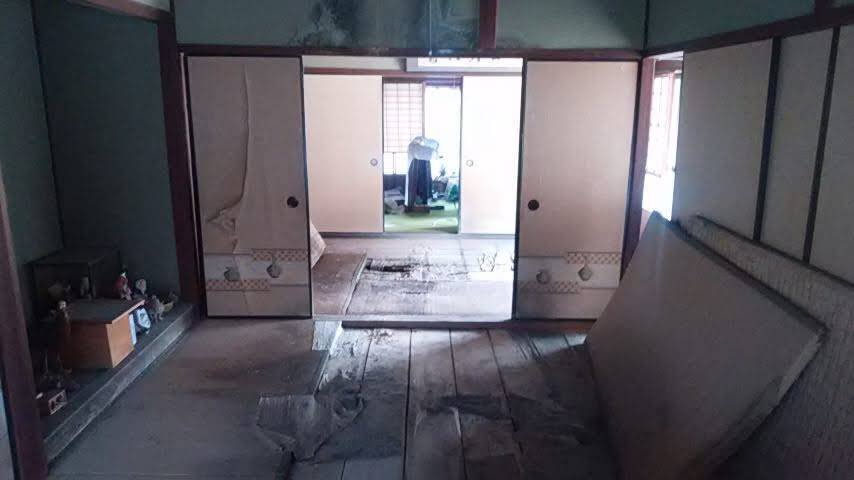
Over time, the house was left empty. Photos from before the restoration show what that looked like. In one of the tatami rooms, the floorboards had collapsed. The old kitchen still had its sink and crockery cabinet, but nothing had been touched for years. Outside, bamboo had grown up against the boundary wall, and at the far end of the plot, dense bamboo covered a pile of fallen stones.
The goal wasn’t to make the house look new. It was to restore the exterior heritage and atmosphere that made it special to the first inhabitants, while making it comfortable to stay in. We kept the original mud walls and the structure of the tiled roof. Then, on the inside, we added modern linings and high-performance insulation that remains hidden behind traditional shikui plaster. This makeover of the interior successfully removes the extreme heat and cold that old houses are usually plagued with, meaning it’s comfortable all year round. All visible materials are natural and generally from the area, including: locally grown hinoki (cypress) and cedar, breathable shikui plaster, raw stone, and delicate shoji paper. Local master artisans built each space using traditional techniques, while an expert roofer laid new clay tiles along the existing ridge lines of the house.
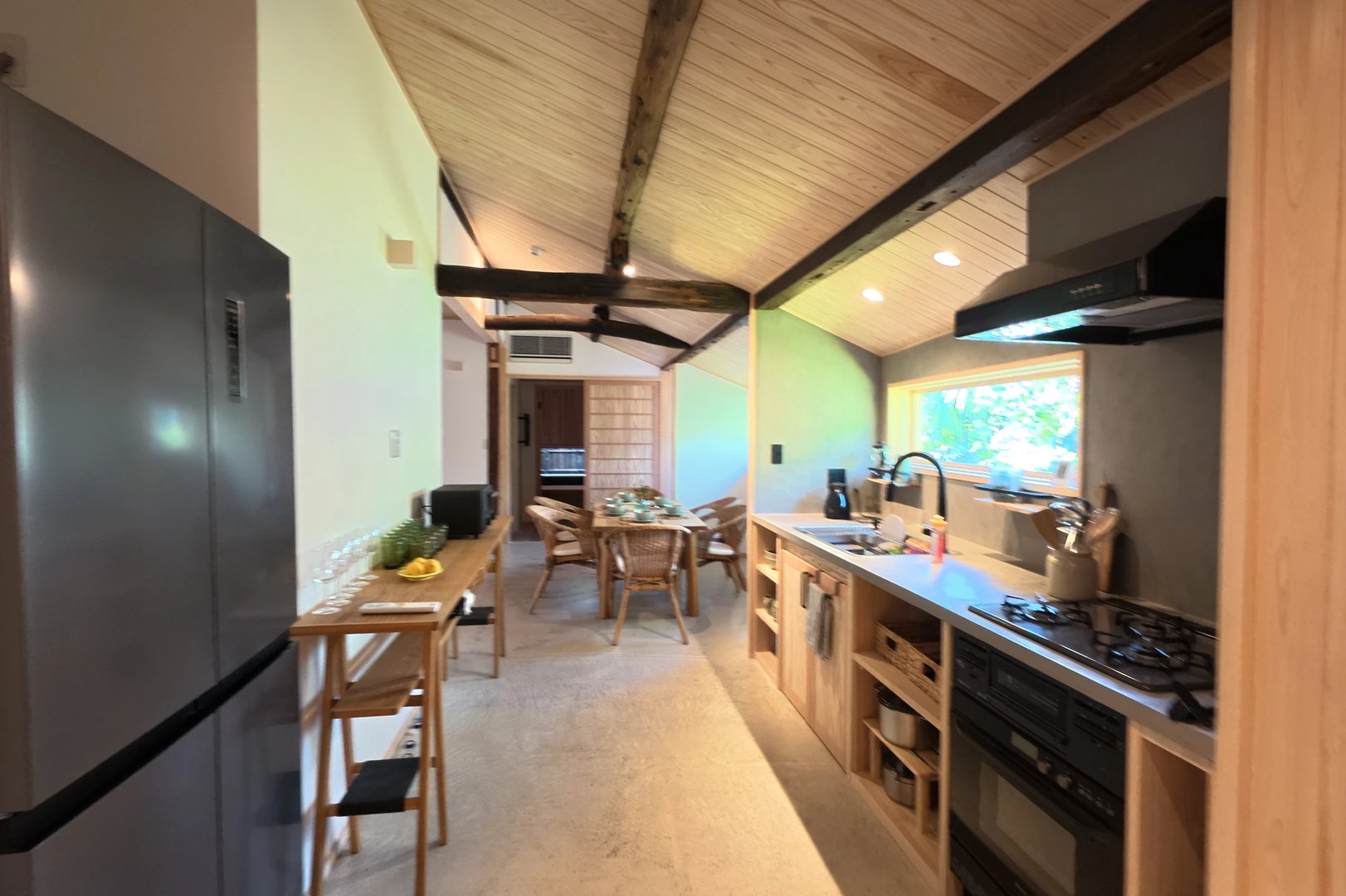
Today, when you step into the house, the fragrance of hinoki and cedar envelopes you. All rooms have cedar ceilings, and entering the kitchen galley, the long “Doma” (dirt floor but done in buffed concrete) sets the perspective lines with the cedar ceiling to focus attention on a rustic backdrop of a timber dining table and wicker chairs. Moving to the living room, you are greeted by painted fusuma panels and shoji screens framing the porch and outside garden. Both bedrooms also feature hand-crafted shoji sliding doors and carefully picked pale timber flooring. The craft of artisans from a century ago appears as the occasional original pole or beam, contrasting but in the same style as fresh wood surfaces created by modern craftsmen still using those traditional techniques. You can see the finished house and book a stay on our Tea House page.
The Tea House shows what an akiya can become. HINOKI STAYS turned a dilapidated and sadly empty heritage home into a sustainable place to stay, bringing new life to the local community. If you own an akiya, or you’re thinking of buying one, we can help with every step, from the search to the renovation to the management of the house afterwards.