How Working Outside Traditional Tech Shaped Me as More Than an Engineer
I'm Rohit Naidu Siriporam, Tech Lead at AKIYA2.0. I've been working here since 2023, and honestly, it's been nothing like what I expected when I first graduated. Going from university straight into the world of Japanese real estate tech has taught me things I never would have learned at a traditional company, and I wanted to share some of those experiences
Breaking Away from the Expected Path
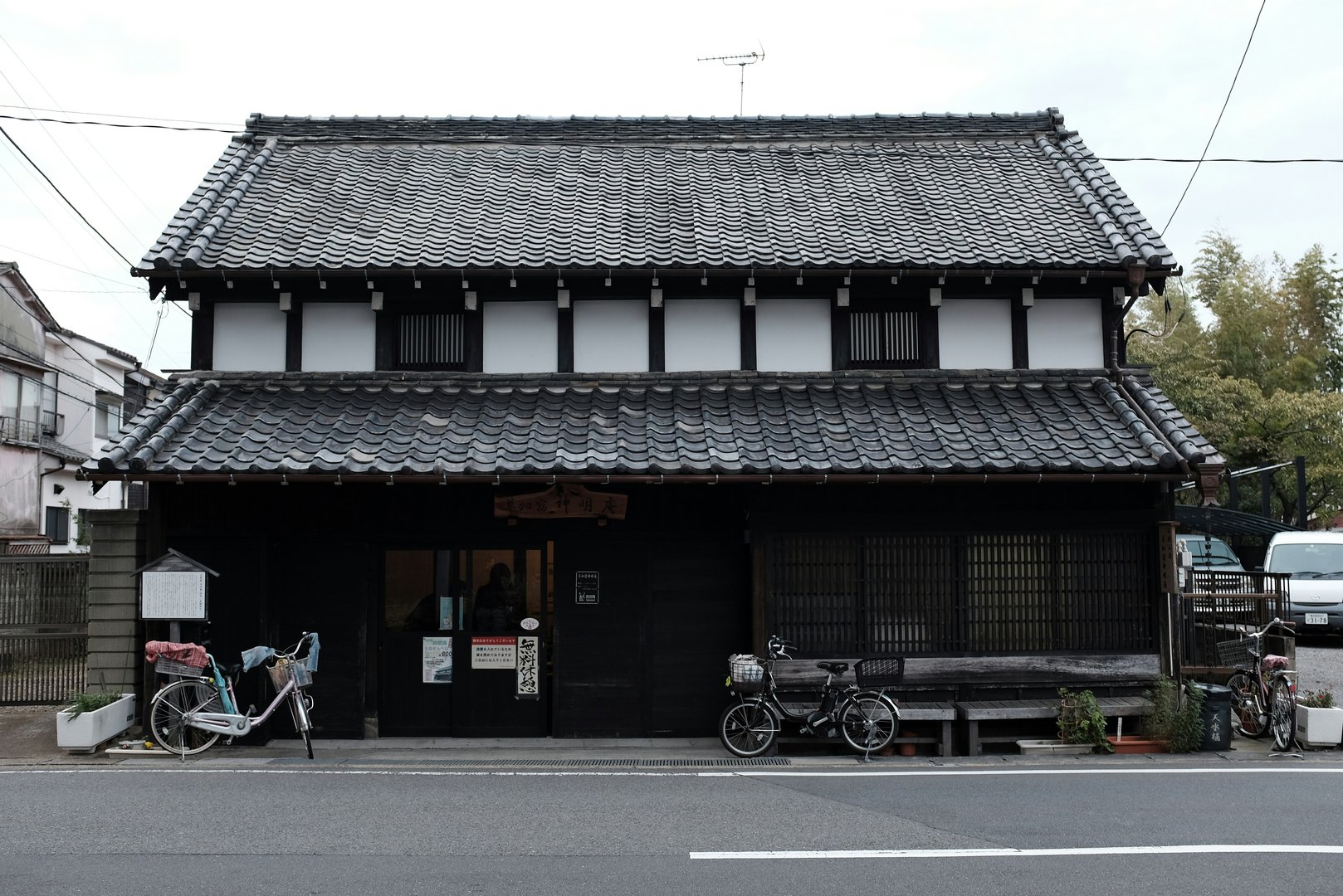
When most of my computer science classmates were targeting positions at big tech companies or the typical startup suspects like fintech, social media, and SaaS platforms, I took a different route. I joined AKIYA2.0, a unique company focused on helping people discover the potential of buying an akiya in Japan and breathing new life into these abandoned traditional houses.
Looking back, this decision to work in real estate tech, specifically in such a niche area around Japanese vacant house renovation, has fundamentally changed how I approach engineering and what I value in my work.
The Reality Check: Tech Isn't Always About Tech
One of the biggest shifts in my thinking came from realizing that being a great engineer isn't just about writing clean code or mastering the latest frameworks. At AKIYA2.0, I quickly learned that understanding the domain you're working in is just as crucial as understanding your technology stack.
Getting to know Japanese real estate law, traditional construction methods, international property transactions, and cultural nuances around homeownership wasn't just helpful. It became essential if I wanted to create meaningful change rather than just execute tasks I was given. When I took time to understand these details and then made a small adjustment to our website, I wasn't just seeing a code change go live. I was witnessing how that tiny modification could shift a user's entire perspective about purchasing an akiya, turning confusion into confidence or hesitation into action.
This context made me a better problem solver. Instead of building features based on assumptions, I started asking deeper questions: Why would someone from Australia want to restore a 100-year-old traditional Japanese house in rural Japan? What are their biggest fears and concerns about akiya renovation costs? How does the akiya purchase process actually work for international buyers?
Small Team, Big Impact: Wearing Multiple Hats
In traditional tech environments, you might have the luxury of focusing purely on your specialty. Frontend, backend, mobile, or DevOps. At a small company working on Akiya property management solutions, that specialization becomes a luxury you can't afford.
One week I'm building user interfaces for property search platforms that connect with akiya banks for foreigners. Next, I'm creating data pipelines to process property listings from various Japanese sources. Sometimes I'm working on learning how AI can help us with traditional Japanese house restoration projects, implementing translation features, or building admin tools for our team to manage customer inquiries about commercialising your akiya for rental income.
This breadth has made me more versatile as an engineer. I understand how different parts of a system interact because I've built many of them myself.
More importantly, I've learned to think in terms of business value rather than just technical elegance. Every feature needs to solve a real problem for our users or our business. There's no room for over-engineering when you're working with limited resources and serving people making significant decisions about rural property investment in Japan.
Understanding Users Beyond Demographics
Working in a specialized field taught me that user research goes much deeper than typical personas and user journeys. Our users aren't just "millennials interested in real estate." They're people with complex motivations, cultural backgrounds, and very specific dreams about their relationship with Japan.
Some are digital nomads looking for a base in Asia through rural property investment in Japan. Others are second-generation Japanese-Americans reconnecting with their heritage by purchasing and restoring family properties. Some are retirees seeking a completely different lifestyle in Japan's countryside. Sadly, some people are those who have lost their homes in war-torn places and are looking for a fresh start through affordable akiya investment opportunities. Each group has different technical comfort levels, different priorities, and different definitions of success when it comes to managing their Japanese property investment.
This diversity forced me to design systems that are flexible and accessible. I couldn't assume everyone would be tech-savvy, or that everyone would interact with our platform in the same way. Building for this varied user base made me a more empathetic developer and taught me to validate assumptions early and often.
The Startup Reality vs Big Tech Myths
Working at a small, mission-driven company has given me perspective on what I actually want from my career. There's no free lunch, no ping pong tables, and no equity that might make me rich. But there's also no bureaucracy slowing down good ideas, no projects that get cancelled after months of work, and no feeling that my contributions are just a drop in an ocean.
When I fix a bug or launch a feature, I can see its immediate impact. When a customer successfully completes their first akiya purchase using our platform, or when someone uses our tools to find their dream house or complete their akiya renovation project, I know that my code played a part in that moment. This direct connection between my work and its outcomes has been incredibly motivating.
I've also learned to be resourceful in ways that big tech environments might not teach. When you can't just spin up another microservice or hire a specialist, you learn to find creative solutions within constraints. This has made me a more thoughtful architect and a more efficient developer.
Learning from Global Perspectives
The way systems work varies drastically around the world, and usually companies need specialized professionals who understand all these nuances and can guide developers like me through the complexities. I've been fortunate to work with two such people: Lester Goh and Terrie Lloyd, the COO and CEO of AKIYA2.0 respectively.
Lester comes from Singapore and Terrie is from New Zealand and Australia, but both have lived in Japan long enough to understand the intricate details of how things work here. This multicultural leadership has given me exposure to different mindsets and approaches from various locations, which has been invaluable for my growth.
What stands out most is their level of professionalism and support. When you're working hard and facing challenging situations, having leaders who genuinely support your growth makes all the difference. Their encouragement has motivated me to push through tough problems and continue learning, even when the technical hurdles seemed overwhelming.
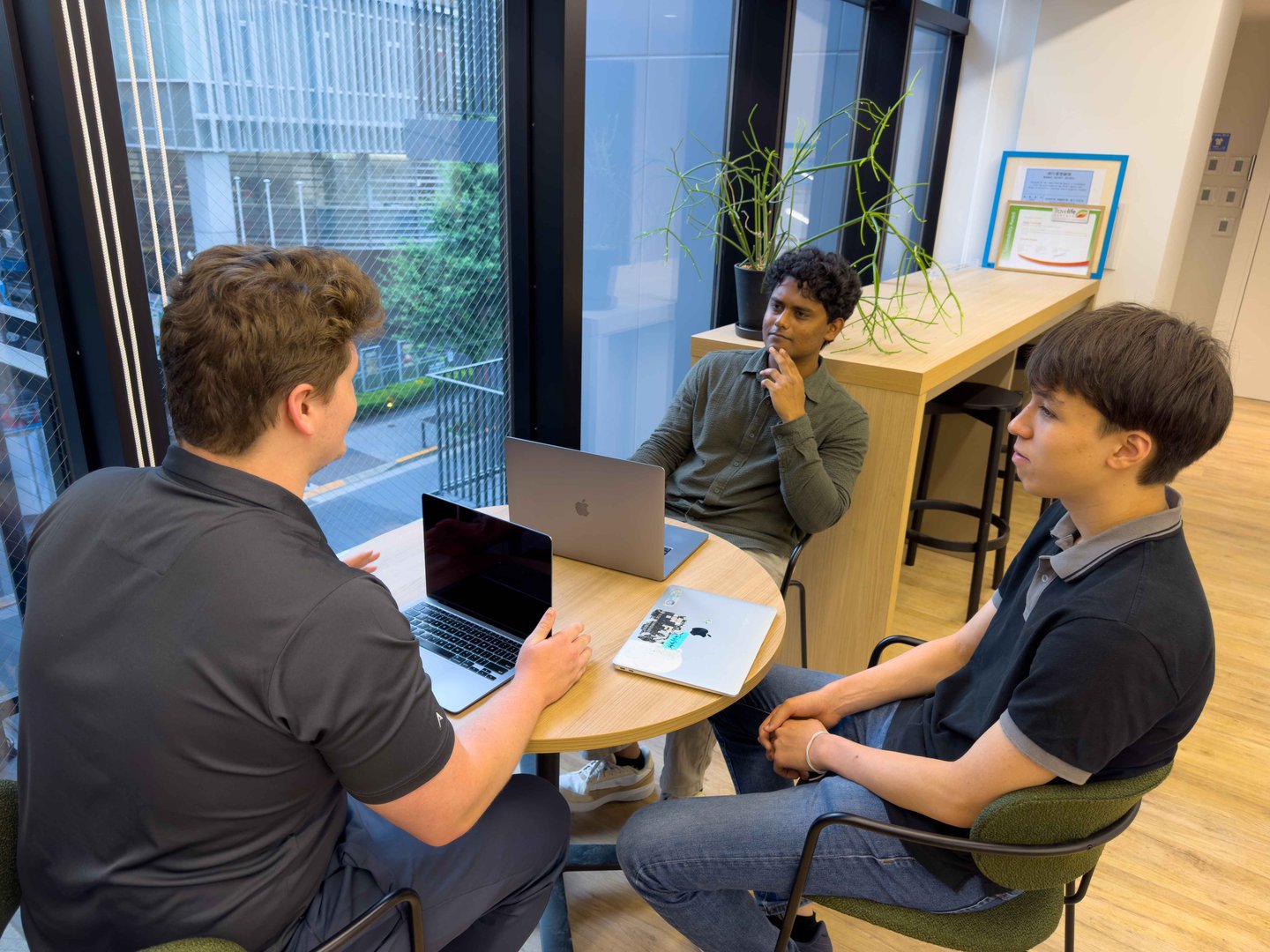
Looking back, I can see how much I've grown since joining as an intern. My eagerness to learn and try new things seemed to fit well with what a young company like AKIYA2.0 needed. As the company has evolved, I've had opportunities to take on more responsibility and learn from each challenge. It's shown me that when you're genuinely motivated and have the right support, growth can happen faster than you might expect.
What I'd Tell My Past Self
If I could go back and talk to myself when I was deciding where to start my career, I'd say this: don't underestimate the value of working somewhere where your individual contributions matter, where you can learn the business deeply, and where you're solving problems that feel meaningful to you personally.
The technical skills you can learn anywhere. What's harder to find is work that challenges you in multiple dimensions. Technically, intellectually, and personally. Working outside traditional tech has given me a unique perspective on what technology can accomplish when it's applied thoughtfully to real human needs, whether that's helping someone navigate vacant house renovation in Japan or connecting families with their heritage through property restoration.
Looking Forward
I'm not saying everyone should avoid big tech or traditional startups. There's tremendous value in those experiences too. But I am saying that some of the most interesting problems and the most rewarding work might be hiding in industries you haven't considered yet.
The next time someone asks me about career advice, I won't just talk about optimizing for salary or prestige. I'll ask them what problems they find genuinely interesting, what kind of impact they want to have, and what kind of person they want to become through their work.
Sometimes the most formative experiences come from taking the path that looks a little different from what everyone else is doing.
Working at AKIYA2.0 has taught me that great engineering isn't just about great code. It's about great solutions to real problems. Whether you're interested in buying an akiya in Japan, exploring akiya investment opportunities, or simply considering a non-traditional tech role, I'd encourage you to think beyond the obvious choices. You might be surprised by what you discover about yourself and your capabilities in the process.
Oh, and if you're curious about akiyas or have any questions about the whole process, don't hesitate to reach out through our contact form. We genuinely love hearing from people who are exploring this path and are always happy to help however we can.